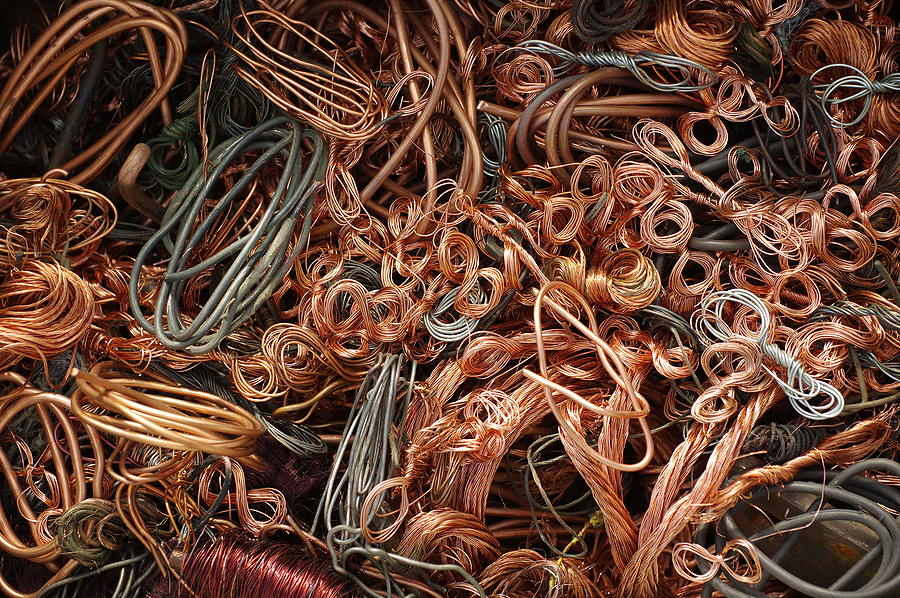
If you’ve ever looked at a pile of old cables or wiring and seen nothing but junk, you might be sitting on a small fortune. Copper is one of the most sought-after metals in the recycling industry, often referred to as “red gold” because of its consistently high value compared to other scrap metals.
For electricians, contractors, or even homeowners renovating in Indianapolis, understanding the value of your materials is crucial. It ensures you aren’t just clearing space—you’re getting paid what you deserve. However, pricing can be volatile, shifting with global stock markets and local demand. Navigating these changes requires a bit of knowledge, but the payoff is worth the effort.
What Drives Copper Wire Prices in Indianapolis?
The price you receive at the scale isn’t an arbitrary number picked by the scrap yard owner. It’s the result of a complex web of global and local factors.
The Global Benchmark (COMEX)
In North America, copper prices are largely dictated by the COMEX (Commodity Exchange) division of the CME Group. This market sets the spot price for copper per pound. If traders on Wall Street are bullish on copper because of new housing starts or electric vehicle production, the price goes up. If the global economy slows down, the price often dips. Local yards in Indianapolis monitor these trends closely and adjust their buy prices accordingly.
The Grade of Your Copper
Not all copper is created equal. The purity and condition of your wire determine its grade, which is the single biggest factor in how much cash you walk away with.
- Bare Bright Copper: This is the gold standard. It refers to 99% pure, uncoated, unalloyed wire (usually 16 gauge or thicker) that has been stripped of all insulation. It must be free of paint, solder, and tarnish.
- #1 Copper: This is clean copper—think bus bars or tubing free of fittings—that might have slight oxidation but no paint or solder.
- #2 Copper: This grade allows for some contamination. It includes wire with shellac or lacquer coatings, or copper pipe with solder or paint. It is valuable, but because it requires more processing to refine, it commands a lower price.
Insulation and Recovery Rates
When you bring in insulated wire, the yard is paying you for the copper inside, not the plastic coating. The price depends on the “recovery rate”—the percentage of copper versus insulation.
- #1 Insulated Wire: Typically has a recovery rate of 70% or higher.
- #2 Insulated Wire: Often has a recovery rate around 50%, usually due to thicker insulation or multiple layers.
Current Market Trends to Watch
The long-term outlook for copper is strong, largely due to the global push for electrification. Electric vehicles (EVs) use significantly more copper than traditional combustion engines—roughly 60 to 70 kg per vehicle compared to 20 to 25 kg. Additionally, renewable energy infrastructure like wind turbines and solar panels relies heavily on copper for efficient energy transmission.
Experts at Benchmark Mineral Intelligence note that while the supply chain is mature, it is currently strained. New copper mines take roughly 15 years to come online, meaning recycled copper is becoming increasingly vital to meet demand. For you, this means your scrap pile is a critical link in the global supply chain, and demand is likely to remain robust despite daily fluctuations.
Maximizing Your Return: Preparation is Key
You don’t need to be a professional scrapper to get a professional payout. A few simple steps in your garage or workshop can significantly increase the value of your load.
Sort Before You Sell
This is the golden rule of scrapping. If you mix high-grade Bare Bright copper with lower-grade #2 insulated wire, the yard may downgrade your entire bin to the lowest common denominator. Separate your materials into distinct buckets:
- Stripped, shiny wire
- Clean tubing
- Insulated wire
To Strip or Not To Strip?
Stripping insulation off your wire upgrades it from “insulated” to “No. 1” or “Bare Bright,” which pays significantly more per pound. However, stripping requires time and effort. If you have thick industrial cable, stripping is almost always worth it. For thin, spaghetti-like extension cords, the time investment might outweigh the extra profit.
▶ Important Note: Never burn the insulation off copper wire. It is illegal, releases toxic fumes into the environment, and harms the quality of the copper, instantly downgrading it to a lower price tier.
Get a Free Offer for Your Scrap Copper Right Now ✅
Navigating Indiana Laws and Regulations
Scrap metal theft has led to stricter regulations across the country, and Indiana is no exception. These laws are designed to protect businesses and homeowners, but they do change how you sell your metal.
When you arrive at a scrap yard in Indianapolis, be prepared for the following requirements mandated by Indiana Code:
- Identification: You must present a valid government-issued photo ID (like a driver’s license). The yard is required to keep a copy on file.
- Recordkeeping: Dealers must record your photo and a photo of the material you are selling. These records are retained for two years.
- Restricted Items: There are strict rules on selling specific items like catalytic converters and HVAC components (evaporator coils or condensers). You generally need documentation proving ownership, such as a bill of sale or a contractor’s license, to sell these items.
- Tag and Hold: In certain cases involving suspicious materials or police notification, yards may place a 5-day hold on materials.
Understanding these rules beforehand ensures a smooth transaction and keeps you on the right side of the law.
Staying Updated on Pricing
Since copper is a commodity traded on the stock market, prices change daily. To ensure you aren’t selling during a dip:
- Check the COMEX Spot Price: This gives you a baseline for the market’s performance.
- Call Ahead: Local yards may have different inventory needs. A quick phone call can confirm their current rate for the specific grade of wire you have.
Conclusion
Selling scrap copper wire is a fantastic way to clean up your workspace, help the environment, and put extra cash in your pocket. Recycling copper uses approximately 85% less energy than mining new ore, meaning your efforts directly contribute to a more sustainable future.
By sorting your materials, understanding the different grades, and staying informed about market trends, you can turn your scrap into a significant asset.
Ready to turn your scrap into cash? If you are in the Indianapolis area and looking for a transparent, fair, and professional recycling partner, we are here to help. Call Garden City Iron & Metal today for a free offer and experience the best service in Indianapolis.
Related Post: Tips for Stripping Copper Wire for Scrap Metal