Upgrading to a new computer or television feels exciting, but it often leaves you with outdated devices taking up space in your home or office. Getting rid of old electronics can feel confusing, especially when you know they do not belong in a standard garbage bin. Simply throwing them in the trash is actually harmful to the environment and illegal in the state of Indiana.
Effective since July 1, 2009, the Indiana Electronic Waste Law (IC 13-20.5) established the Indiana E-Cycle program. This legislation fundamentally changed how residents, schools, and small businesses must dispose of their outdated technology.
This guide covers everything you need to know about state regulations, identifying covered devices, and safely recycling your scrap e-waste.
Key Provisions of the Indiana Electronic Waste Law
The state’s e-waste legislation protects local ecosystems by ensuring hazardous materials are handled responsibly. The law places a shared responsibility on electronics manufacturers, retailers, and consumers to keep toxic components out of the ground.
Covered Electronic Devices
Under the Indiana E-Cycle program, manufacturers of video display devices (VDDs) must collect and recycle a specific percentage of the devices they sell to Indiana households. They are legally required to recycle an amount equal to at least 60% by weight of the VDDs they produce and sell within the state. To meet this goal, manufacturers partner with registered local collectors.
Consumer and Business Responsibilities
For the average resident or small business owner, the most impactful part of this law is the disposal prohibition. Households, public schools, charter schools, and small businesses are legally barred from throwing specific electronics in their standard garbage.
Prohibited Disposal Methods
As of January 1, 2011, covered electronic devices cannot be discarded in municipal waste intended for landfills. They are also strictly banned from being disposed of by burning or incineration.
Identifying Your E-Waste: What Qualifies?
A good rule of thumb is to look at the device’s function. If it features a video display screen larger than four inches, connects to a computer to provide input or output, or plays digital media, it likely falls under the e-waste disposal ban.
Common Household Electronics
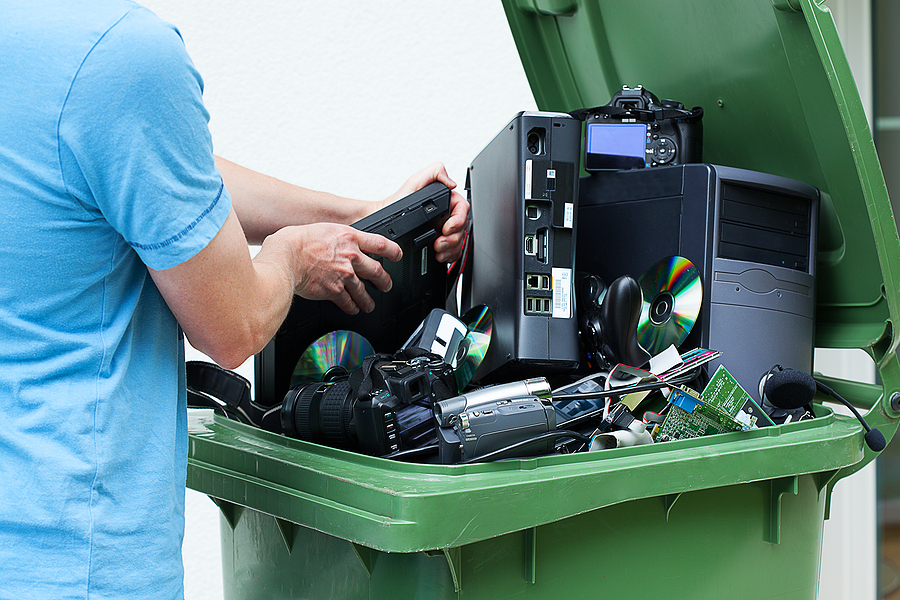
Everyday entertainment and personal computing devices are strictly regulated. This includes televisions, computer monitors, desktop computers, laptops, and tablets. E-readers, DVD players, gaming systems, and MP3 players also require specialized electronic recycling.
Office and Business Equipment
Workplaces generate a massive amount of electronic waste. Fax machines, printers, projectors, and all-in-one scanner/copiers are completely banned from Indiana landfills. Peripherals like keyboards, mice, and external hard drives must also be recycled through proper channels.
Items That Might Surprise You
Some regulated devices often catch people off guard. Digital photo frames, portable GPS navigation systems, digital cameras, and DVR devices (including cable and satellite boxes) are all classified as e-waste. Standard household appliances like microwaves, toasters, and refrigerators are not covered under this specific law, though they do have their own separate disposal guidelines.
Simple Ways to Dispose of E-Waste Legally
Properly disposing of your electronics takes a small amount of planning, but the process is highly straightforward once you know where to look.
Certified Recycling Centers in Indiana
Because of strict environmental regulations, you cannot take e-waste to just any scrap yard. You must use a scrap metal recycling center that is registered with the Indiana Department of Environmental Management (IDEM). IDEM provides a comprehensive, county-by-county list of authorized drop-off locations and recycling centers on their official website.
Manufacturer Take-Back Programs
To meet their state-mandated recycling quotas, many manufacturers offer convenient take-back programs. When you buy a new device, check if the brand provides a free mail-in or drop-off service for your older models.
Special Collection Events
Local solid waste management districts frequently host designated e-waste collection days. These community events offer an easy way to drop off bulky items like heavy desktop computer towers or old CRT televisions that are otherwise difficult to transport.
Preparing Your E-Waste for Recycling
Before handing over your old technology, you need to make sure your data is secure and the physical hardware is safe to transport.
Data Security: Wiping Personal Information
Your old smartphone or laptop likely holds years of sensitive personal data. Before recycling, back up any important files, photos, or documents to a cloud service or an external hard drive. Once your data is safe, perform a complete factory reset to wipe the device clean and protect yourself from identity theft.
Safely Handling and Storing Devices
Gather all the devices you plan to discard. Keep their cords, cables, and peripheral devices bundled with their primary units, which makes the sorting process easier for recycling facilities. If you have damaged electronics, handle them with extreme care. Broken screens on older monitors can expose you to leaded glass, so wear gloves and place shattered items in a sealed cardboard box.
The Environmental Impact of E-Waste
A broken computer might seem harmless sitting in your garage, but improperly discarding it creates a lasting negative impact on the earth.
Harmful Chemicals and Pollution
Devices like older computer monitors and televisions contain heavy metals such as lead, mercury, and cadmium. When e-waste goes to a landfill, these toxic chemicals can slowly leach into the soil and contaminate local groundwater. This pollution poses a serious threat to local wildlife and public health.
Resource Conservation Through Recycling
Electronics contain a complex mix of highly valuable materials. Recycling allows specialized facilities to recover precious metals like gold and copper, along with reusable glass and plastics. Reusing these materials reduces the need to mine for new raw resources, conserving massive amounts of energy and minimizing greenhouse gas emissions.
Benefits of E-Waste Recycling in Indiana
Participating in the Indiana E-Cycle program does more than just keep you compliant with state laws. It actively improves your local community.
Protecting Public Health
By keeping lead and mercury out of local water tables, responsible e-waste disposal directly protects the drinking water of millions of Hoosiers. It prevents severe neurological and developmental health risks associated with heavy metal exposure.
Economic Advantages and the Circular Economy
Recycling electronics supports a growing green energy sector in Indiana. It creates local jobs in the sorting, dismantling, and processing industries. Feeding recovered metals back into the manufacturing cycle supports a circular economy, drastically reducing production costs for new technology.
Frequently Asked Questions About Indiana’s E-Waste Law
Can I throw batteries in the trash?
It depends entirely on the type of battery. Regular alkaline batteries (like standard AA or AAA) are generally safe to place in your regular household trash in Indiana. However, rechargeable batteries (like lithium-ion) and lead-acid batteries absolutely do not belong in the trash or recycling bin. They pose severe fire risks, contain toxic materials, and must be taken to a specialized drop-off location.
What happens if I don’t comply?
Discarding prohibited electronic waste in regular trash violates state environmental regulations. For businesses, non-compliance can lead to hefty financial fines and significant reputational damage. While individual households are rarely audited for their trash, tossing e-waste illegally contributes directly to local environmental degradation.
Where can I find a list of certified recyclers?
The Indiana Department of Environmental Management (IDEM) maintains an updated, county-by-county list of registered e-waste collectors on their official Recycle Indiana website. Always verify that a facility is IDEM-registered before dropping off your devices.
Make the Right Choice for Your Old Electronics
E-waste recycling is a vital step in keeping our communities safe, clean, and sustainable. By following state guidelines, you take an active role in preventing toxic pollution and promoting responsible resource management. Do not let your old devices slowly degrade in a landfill when they can be repurposed safely.
Begin electronic waste recycling in Indianapolis, Indiana. Earn instant cash for your recyclable e-waste. Get a free offer today.
Related Post: Electronic Waste: A Growing Crisis and Your Role in the Solution